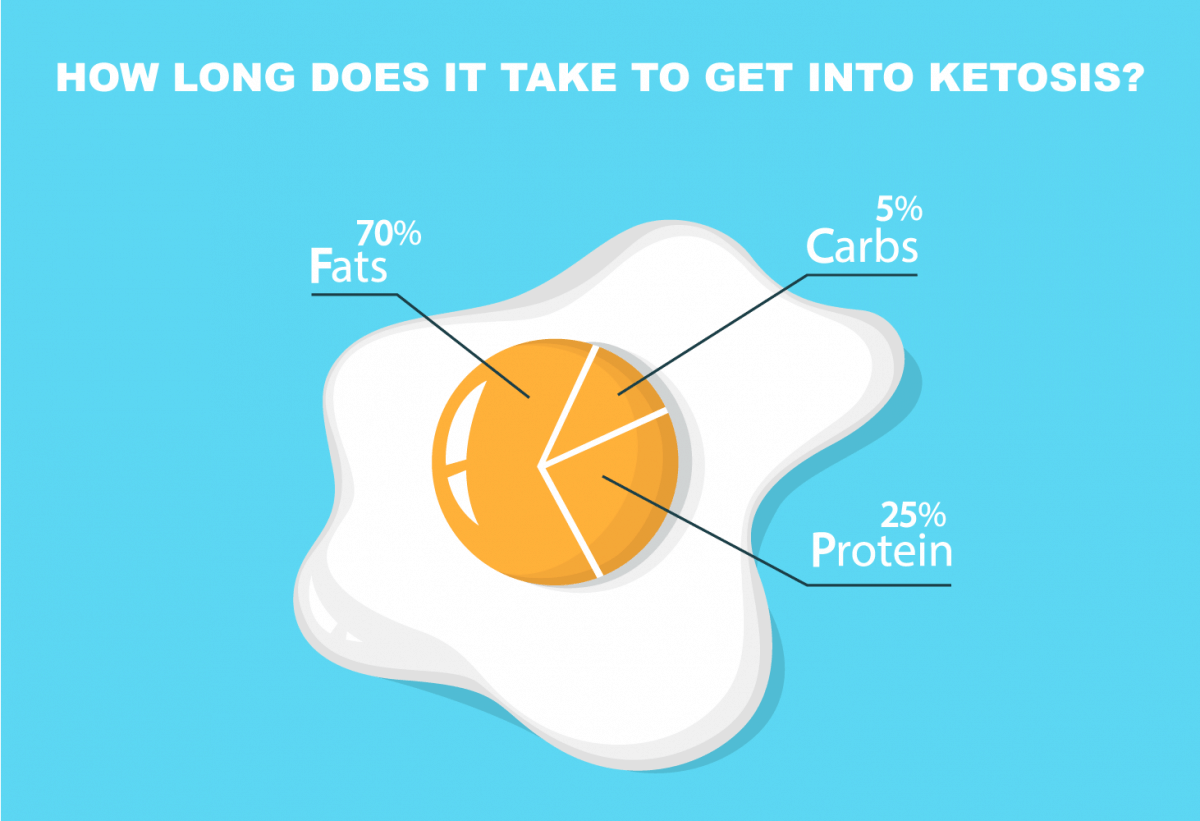
Most people get into ketosis within 2 to 4 days of eating fewer than 20 to 50 grams of carbohydrates per day. Depending on your metabolism, activity level, and how many carbs you ate before starting, it can happen as fast as 24 hours or take a week or more. This is the range that Cleveland Clinic, Healthline, and WebMD all report.
Ketosis is the metabolic state where your body runs low on glucose and shifts to burning fat, producing molecules called ketones for fuel. The speed of that switch comes down to one thing: how long it takes to burn through your stored carbohydrate (glycogen). Once those stores drop low enough, your liver starts making ketones, and blood ketone levels rise into nutritional ketosis (0.5 mM or higher).
Day-by-Day Ketosis Timeline
The transition follows a predictable pattern tied to glycogen depletion and water loss.
Day 1 to 2: Glycogen depletion begins
For the first day or two, your body burns through glucose from your last meals and starts drawing down glycogen stored in the liver and muscles. A typical person stores 300 to 500 grams of glycogen, and each gram holds roughly 3 grams of water. As glycogen falls, you lose water weight and urinate more often. Ketone levels are still low. This is why the scale can drop several pounds in the first few days: most of it is water, not fat.
Day 3 to 4: Ketone production ramps up
By day 3, glycogen stores are largely depleted and the liver increases ketone output. Most people reach nutritional ketosis somewhere in this window. This is also when keto flu symptoms tend to peak, including headache, fatigue, irritability, and lightheadedness. These are driven mostly by the water and electrolyte loss from glycogen depletion, not by ketosis itself. Replacing sodium, potassium, and magnesium and drinking enough water usually blunts the worst of it.
Day 5 to 7: Ketosis stabilizes
By the end of the first week, blood ketones for most people sit comfortably in the nutritional ketosis range. Keto flu symptoms usually fade as electrolytes rebalance. Appetite often drops and energy starts to feel steadier. You are in ketosis, but your body is not yet efficient at using it.
Week 2 and beyond: Keto-adaptation
Reaching ketosis is not the same as being keto-adapted. Over the following two to six weeks, your muscles and brain become better at using ketones and fat for fuel. Physical performance, mental clarity, and endurance that may have dipped during the first week typically recover and often improve. Full fat-adaptation is a gradual process, not a single moment.
Factors That Speed Up or Slow Down Ketosis
Two people following the same diet can enter ketosis days apart. These are the variables that matter most:
- Prior carbohydrate intake: The more carbs you ate before starting, the fuller your glycogen stores and the longer they take to deplete. Someone coming off a high-sugar diet takes longer than someone already eating low carb.
- Daily carb limit: Eating under 20 grams of carbs per day depletes glycogen faster than staying near the 50-gram ceiling. Lower carbs generally mean faster ketosis.
- Activity level and exercise: Physical activity, especially higher-intensity training, burns glycogen quickly. More active people often reach ketosis sooner.
- Fasting: Skipping meals or using an intermittent fasting window empties glycogen faster than eating low carb alone.
- Protein intake: Very high protein intake can be partly converted to glucose through gluconeogenesis, which can slow the transition for some people.
- Metabolic factors: Age, hormonal status, resting metabolic rate, and body composition all influence how fast your body clears glucose and adapts to fat.
Does Fasting Get You Into Ketosis Faster?
Yes. Fasting is the fastest reliable route because it stops all incoming glucose, so glycogen depletes on its own schedule. Harvard Health notes that the body can begin producing ketones after roughly 12 hours without eating, which is why brief overnight ketone production is common even for people not on keto. That early production is mild, though. Deeper nutritional ketosis usually sets in closer to the 24-hour mark of a full fast, once glycogen is more thoroughly depleted.
For most people the practical approach is combining the two: eat under 20 to 50 grams of carbs and use a daily fasting window such as 16:8. That reaches ketosis faster than either method alone, and it is more sustainable than long fasts. An occasional 24-hour fast can jump-start the process at the very start of a keto diet.
How to Know You’re in Ketosis
You will likely notice some symptoms, but symptoms alone are not proof. Common early signs include:
- Reduced appetite
- Increased thirst and more frequent urination
- A fruity or metallic taste, known as keto breath
- Short-term fatigue or brain fog, followed by steadier energy
- Mild digestive changes
The only way to confirm ketosis is to measure ketones. There are three options:
- Blood ketone meter: The most accurate method. It measures beta-hydroxybutyrate (BHB) directly. A reading of 0.5 mM or higher confirms nutritional ketosis. It requires a finger prick and test strips, which cost more than the alternatives. See our guide to the best keto blood meters.
- Breath analyzer: Estimates ketones by measuring acetone in your breath. Reusable and needle-free, though less precise than blood.
- Urine strips: The cheapest option. They detect excess acetoacetate spilled into urine, which makes them useful for beginners but less accurate over time, since your body wastes fewer ketones once adapted. Hydration also affects the reading.
How to Get Into Ketosis Faster
These evidence-based methods work by depleting glycogen or supplementing ketones directly. No gimmicks required.
- Keep carbs very low. Staying under 20 to 30 grams of net carbs per day, rather than at the 50-gram limit, is the single most reliable way to speed things up.
- Add a fasting window. Intermittent fasting, such as a 16:8 schedule or an occasional 24-hour fast, empties glycogen quickly. Your body naturally shifts toward ketone production during longer fasts.
- Exercise. Higher-intensity or fasted training burns through glycogen faster. Ketone levels can stay elevated for hours after a workout.
- Consider MCT oil. Medium-chain triglycerides, particularly C8 (caprylic acid), are absorbed and converted to ketones quickly, which can nudge levels up during the transition. See how much to use in our MCT oil guide.
- Watch hidden carbs and excess protein. Sauces, condiments, and starchy vegetables add up. Keeping protein moderate avoids slowing the switch through gluconeogenesis.
A quick note on exogenous ketone supplements: drinking ketones raises the ketones in your blood, but it does not force your own body to make them. They can ease the transition, but they are not a substitute for a low carb diet if your goal is genuine, self-sustaining ketosis.
The Bottom Line
Plan on 2 to 4 days to enter ketosis on a standard keto diet, and up to a week if you are coming off a high-carb diet or eating near the upper carb limit. You can shorten that with tighter carb limits, a fasting window, and exercise. Expect the first week to feel like an adjustment as your body sheds water and rebalances electrolytes, then a longer keto-adaptation phase over the following weeks where fat-burning becomes efficient. Reaching ketosis once does not lock you in: a high-carb day refills glycogen and briefly pauses ketosis, but you will return within 1 to 3 days once you resume low carb eating.